
Remedial Massage
Remedial massage is a hands-on approach used when pain, tightness, or restricted movement keeps returning.
It’s common to hear things like:
“it settles for a bit, then flares again”
“it never fully lets go”
“it’s always the same spot”
This page explains what remedial massage is, what it’s used for, and what it may feel like. It’s here to help you decide if it sounds relevant.
If you’re unsure whether remedial massage is the right starting point, you can also view the full range of treatment approaches I use and how they’re typically applied.

What it is used for
Remedial massage is often used when someone is dealing with patterns like:
- Neck or shoulder tension that builds across the week
- Lower back tightness that returns after sitting, driving, or lifting
- A “hot spot” that flares with training or work tasks
- Headaches that seem linked to neck or jaw tension
- Stiffness around joints that feel guarded or restricted
- A sense that one area keeps compensating for another
It isn’t applied as a routine full-body massage. Some areas are worked directly. Others are left alone.
How it works
Remedial massage uses touch to assess how tissue is behaving and how your body is moving that day.
Pressure is applied where the body is holding on or guarding, often as a protective response rather than a sign of damage.
Pain and tension are often influenced by how the nervous system is responding, not just the condition of the tissue itself.
The technique is not the goal.
The goal is to respond to what the body is doing in real time.
What treatment feels like
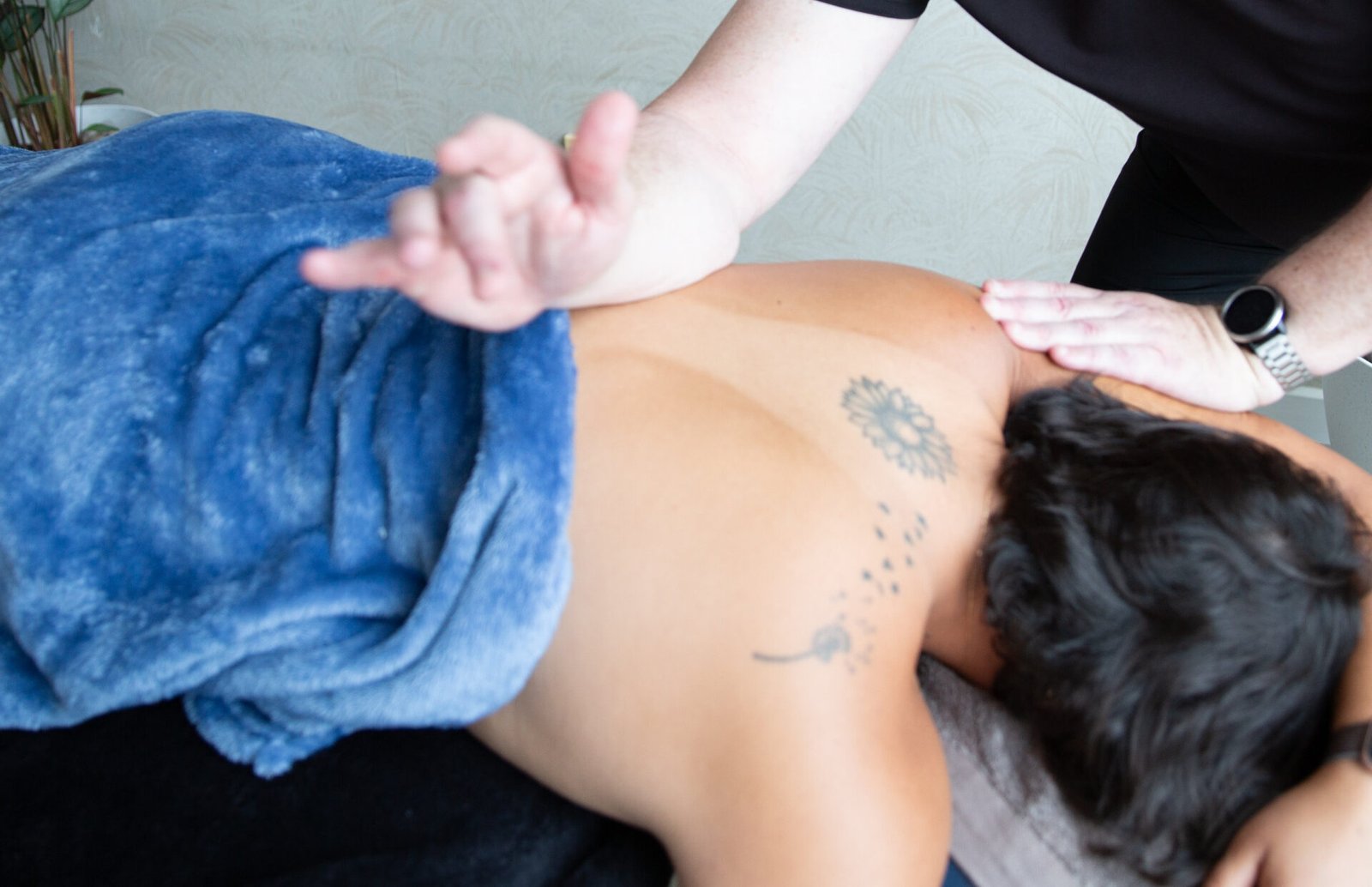
Remedial massage usually feels focused and deliberate.
Some areas feel firm or strong.
Others feel surprisingly sensitive, even with lighter pressure.
Pressure is adjusted as you go. You can ask to change depth, pace, or position at any time.
Nothing is forced. Consent guides the session.
Who it may suit / when it may not
Remedial massage may suit you if:
- You prefer hands-on work to address physical tension
- You feel stiff, restricted, or “held” in certain areas
- You want an assessment-led approach rather than a routine session
- You want the session adjusted based on how you respond
It may not be appropriate if:
- It may not be appropriate if:
- You feel unwell, feverish, or there are signs of infection
- There has been recent trauma where medical review is needed
- Touch does not feel safe or tolerable right now
If you’re unsure, that uncertainty is part of the conversation.
Expected outcomes
Responses vary.
Some people notice an easier sense of movement or less “pulling” after a session.
Others notice change more gradually.
Sometimes the first change is how an area feels or moves, rather than how painful it is.
There is no single-session fix. Ongoing patterns often need repeated input and adjustment over time.
How it fits into treatment
Remedial massage is one part of an assessment-led plan.
Hands-on work can help the body feel safer and less guarded, which can make movement and loading an area easier over time.
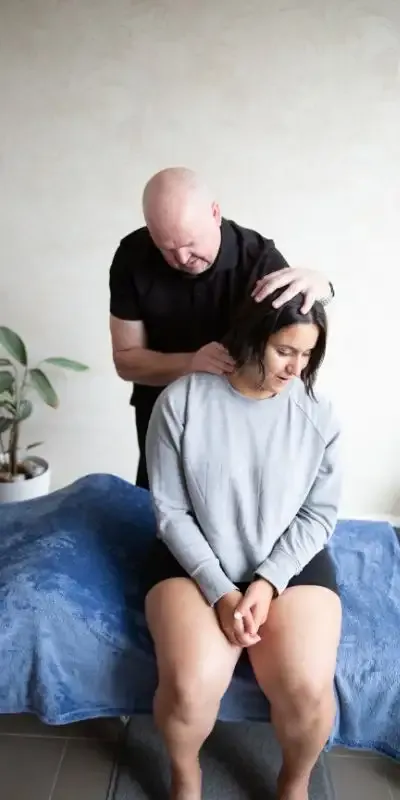
Depending on what shows up, treatment may also include simple movement guidance, pacing, and practical changes around training, work, or recovery.
What is used can change from session to session as your body responds.
Next steps
If you’re deciding whether remedial massage is appropriate, you can review how appointments work and what to choose for a first visit.
FAQs
Is remedial massage always deep pressure?
Not always. Pressure changes depending on the area and how your body responds. You can ask to adjust it at any point.
Do I need to know exactly what’s wrong before I come in?
No. The session starts with a short conversation and a simple movement check to guide what makes sense on the day.
If it keeps coming back, does that mean something is damaged?
Not necessarily. Ongoing pain and tightness can be linked to sensitivity, guarding, and how an area is being loaded over time. That’s what assessment aims to clarify.