
Neuromuscular Cupping Therapy
I'm Anthony McKergow, a remedial massage therapist based in Hoppers Crossing, holding a Diploma of Remedial Massage (HLT52015) and a professional member of Massage and Myotherapy Australia. I see clients from Hoppers Crossing, Werribee, and Melbourne's western suburbs.
Neuromuscular cupping is a decompression-based approach I use when muscle tension, guarding, or restricted movement does not respond well to hands-on pressure. Rather than compressing tissue, suction gently lifts the skin and underlying layers to reduce protective tone and improve how an area moves under load.
Last reviewed: June 2026
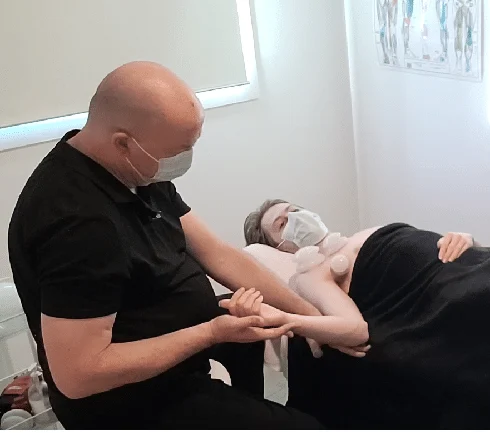
Addressing protective muscle patterns
This approach is commonly considered when tissue feels guarded, dense, or resistant to hands-on pressure rather than acutely injured.
It is often relevant where there is:
- Persistent muscle guarding
- Tightness that returns quickly after treatment
- Sensitivity to firm manual pressure
- Movement restriction without a clear structural cause
Neuromuscular cupping is frequently applied around joints and regions where muscles are working harder than necessary to protect an area.
How cupping influences tissue behaviour and movement
Cupping changes how force is applied to the body. Instead of compressing tissue downward, suction gently lifts the skin and underlying layers.
This can:
- Reduce sustained compression between tissue layers
- Improve glide between muscle and fascia
- Change the way the area is loaded and sensed by the nervous system
- Allow protective muscle tone to ease
A 2025 systematic review and meta-analysis published in BMJ Open, which analysed randomised controlled trials on cupping therapy for chronic musculoskeletal pain, found a significant reduction in pain intensity, with the strongest evidence for neck and shoulder presentations (Jia et al., 2025).
When pain or restriction is present, muscles around a joint often lose their normal coordination. One group may tighten excessively while opposing or supporting muscles reduce their activity. By reducing local compression and altering sensory input, cupping can help restore a more balanced movement response.
What the treatment typically feels like
During treatment, cups are placed on the skin and may remain still or be moved slowly through the area.
Most people describe the sensation as:
- A pulling or stretching feeling
- Firm but not sharp
- Often described as relieving once the tissue settles into the suction
Temporary skin marks can occur. These are expected and usually fade within several days.
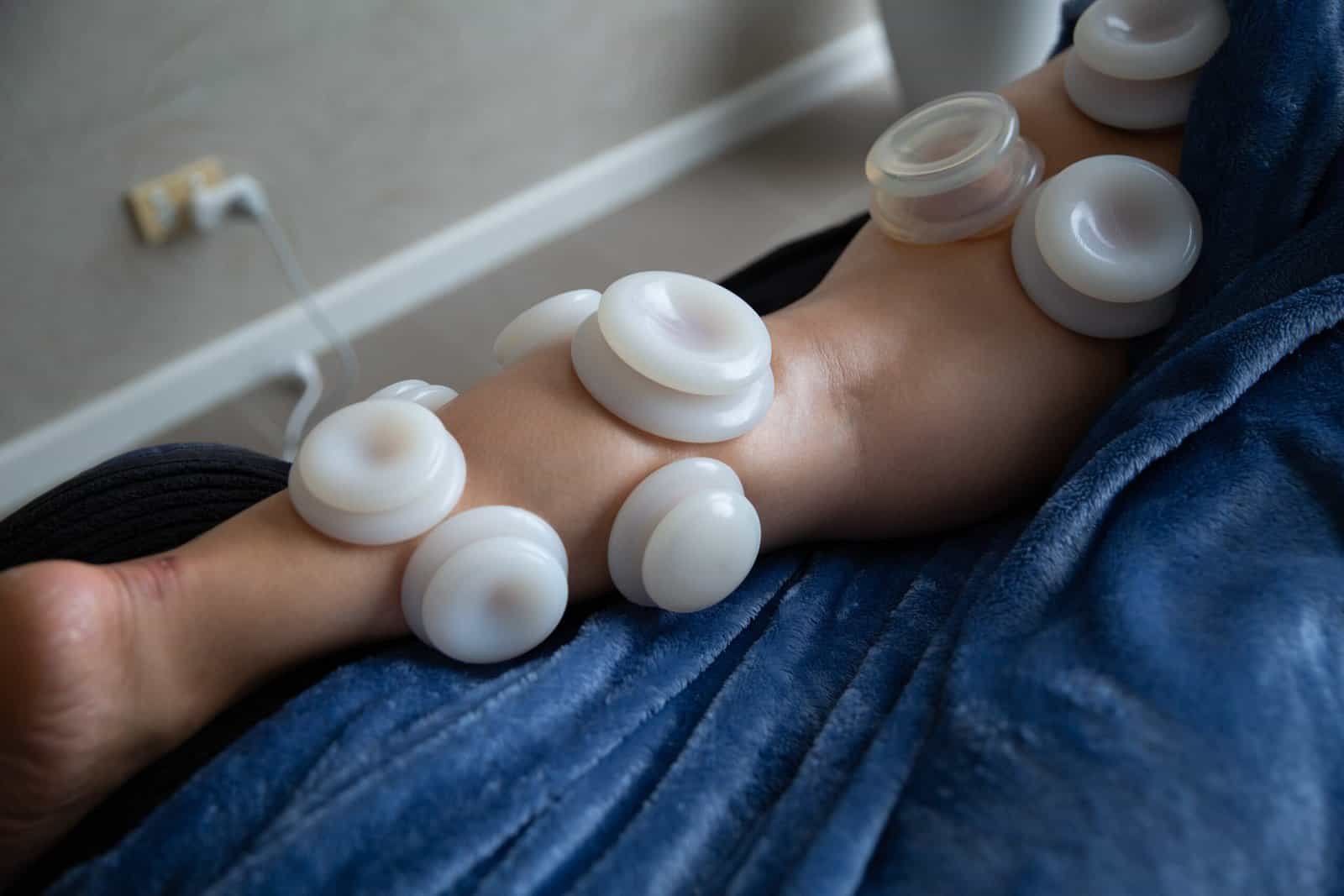
When this approach is considered
Neuromuscular cupping therapy may suit people who:
- Experience long-standing muscle tightness
- Do not respond well to deep pressure
- Feel restricted rather than acutely injured
- Notice pain or tension patterns that shift or spread
As with all techniques, suitability is assessed beforehand. Cupping is avoided over broken skin, active infection, or where contraindicated.
Using cupping within a broader plan
Neuromuscular cupping therapy is used to support other hands-on and movement-based approaches. It is commonly combined with:
- Soft-tissue or trigger point work
- Movement-based treatment
The focus is not just symptom relief, but improving how tissue behaves under load over time.
Ready to book?
If neuromuscular cupping sounds right for what you're experiencing, book a session online.
FAQs
Does neuromuscular cupping hurt, and why does it leave marks?
Cupping is generally described as a pulling or stretching sensation rather than pain. The suction lifts tissue rather than compressing it, which many people find more comfortable than firm manual pressure. Temporary marks can appear on the skin where cups are applied. These are caused by changes in local blood flow beneath the skin surface and are not bruises in the conventional sense. They typically fade within a few days and do not indicate tissue damage.
Why use suction rather than pressure to address muscle tension?
Some areas of persistent muscle tightness do not respond well to compression-based techniques. When tissue feels guarded or dense and direct pressure causes bracing rather than release, cupping offers a different approach. By lifting the tissue rather than pressing into it, suction changes how the area is loaded and how it is sensed by the nervous system. This can allow protective tone to ease in areas where hands-on pressure has not produced lasting change.
Can anyone have cupping, or are there reasons to avoid it?
Cupping is not appropriate in all situations. It is avoided over broken or irritated skin, areas of active infection, and where there are conditions that affect how blood behaves under the skin. In some cases, pressure is adjusted or certain areas are left out depending on individual health history. Suitability is discussed before treatment begins so there are no surprises, and no technique is applied without that conversation first.
How long do the marks from cupping last?
Most marks fade within three to five days, though this varies depending on how much suction was used, the area treated, and individual differences in skin and circulation. Darker marks tend to appear in areas where tissue has been under more sustained load and are not an indicator of how effective the session was. They are not painful to touch once the session is complete, and they settle on their own without requiring any specific aftercare.
What does cupping actually feel like during a session?
When the cup is applied, most people notice a firm pulling sensation as the suction takes hold. This can feel unusual initially, particularly in areas that have been tight for some time. As the tissue settles into the suction, the sensation often becomes less intense and the area may feel warmer or more responsive. Cups may be held still or moved slowly across the skin depending on what the area needs. The overall experience is usually described as firm but not sharp.
Is neuromuscular cupping used on its own?
Cupping is used as part of a remedial massage session rather than as a standalone appointment. It is most effective when combined with hands-on soft tissue work or movement-based techniques, because reducing tissue resistance through cupping allows other approaches to work more easily. The decision to use cupping is made based on how the body is presenting on the day, not as a fixed part of every session.