
Muscle Energy Technique
Muscle Energy Technique (MET) is a hands-on method that uses gentle, controlled muscle contractions to help improve joint movement and reduce unnecessary muscle tension.
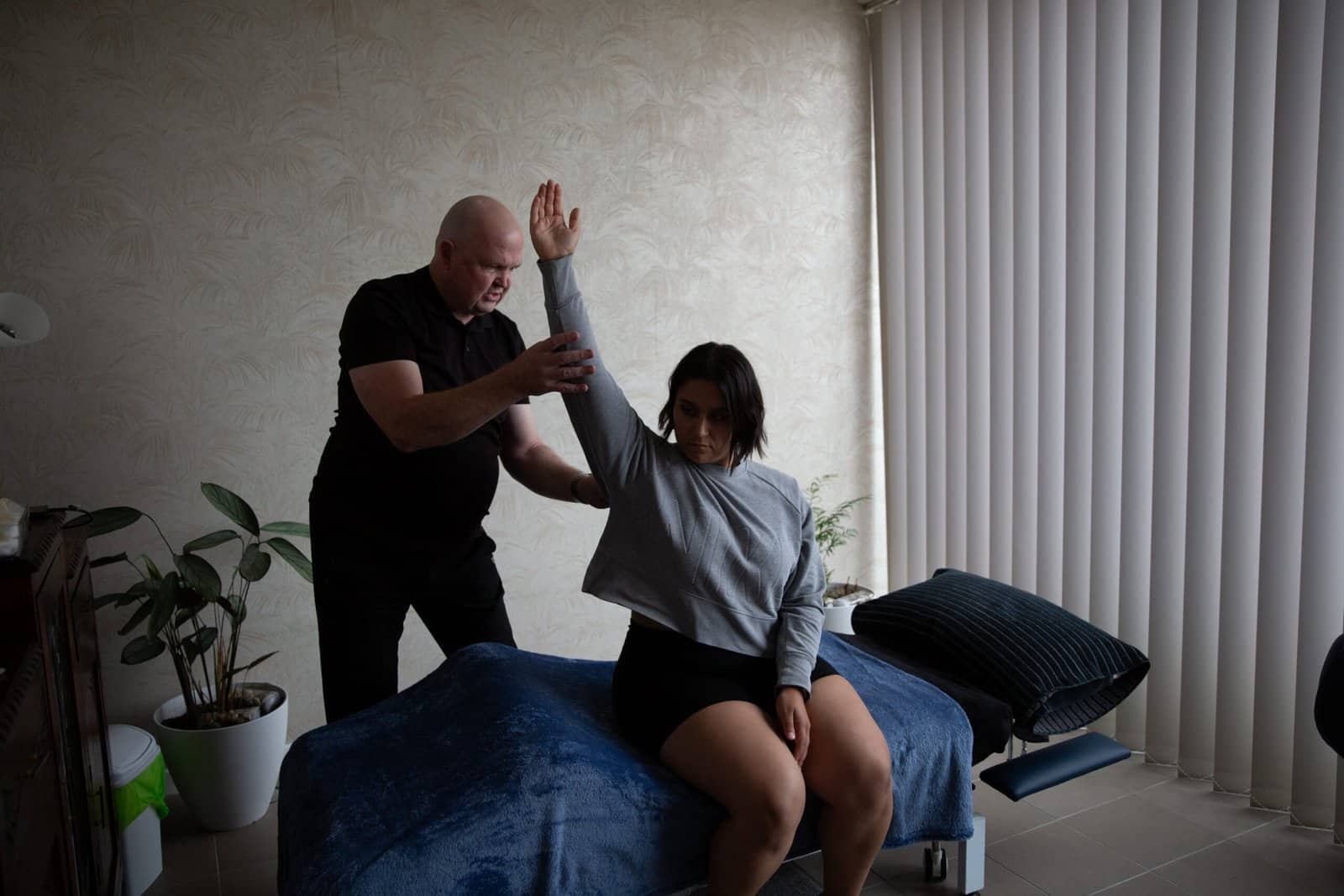
Unlike techniques where the therapist applies sustained pressure, MET is active. You are guided to contract a specific muscle lightly while the therapist provides resistance and positioning. After each contraction, the muscle is allowed to relax, often allowing a small but meaningful improvement in movement or ease.
MET is commonly used when a joint feels restricted, guarded, or stiff rather than “tight from knots.” It is particularly useful when pain or injury has changed how the body moves or holds itself.
The approach is low-force, deliberate, and guided by assessment rather than intensity.
What Muscle Energy Technique is commonly used for
Muscle Energy Technique is most often used when movement feels restricted or guarded, rather than simply tight or sore.
It is commonly applied in situations where pain, injury, or prolonged tension has changed how a joint is moving or being controlled.
MET is frequently used to support:
- Restricted joint range that improves slightly but then “hits a block”
- Protective muscle tone around a joint after pain or strain
- Side-to-side movement differences that don’t settle with passive work
- Stiffness linked to prolonged posture or repetitive positions
- Early return to movement after pain has settled but confidence has not
Because MET uses gentle, guided effort from the client, it can be useful when stronger techniques feel unnecessary or poorly tolerated.
It is often chosen when the goal is to restore smoother movement and coordination, not to apply deeper pressure.
How Muscle Energy Technique works
Muscle Energy Technique uses gentle muscle contractions to influence movement and muscle tone.
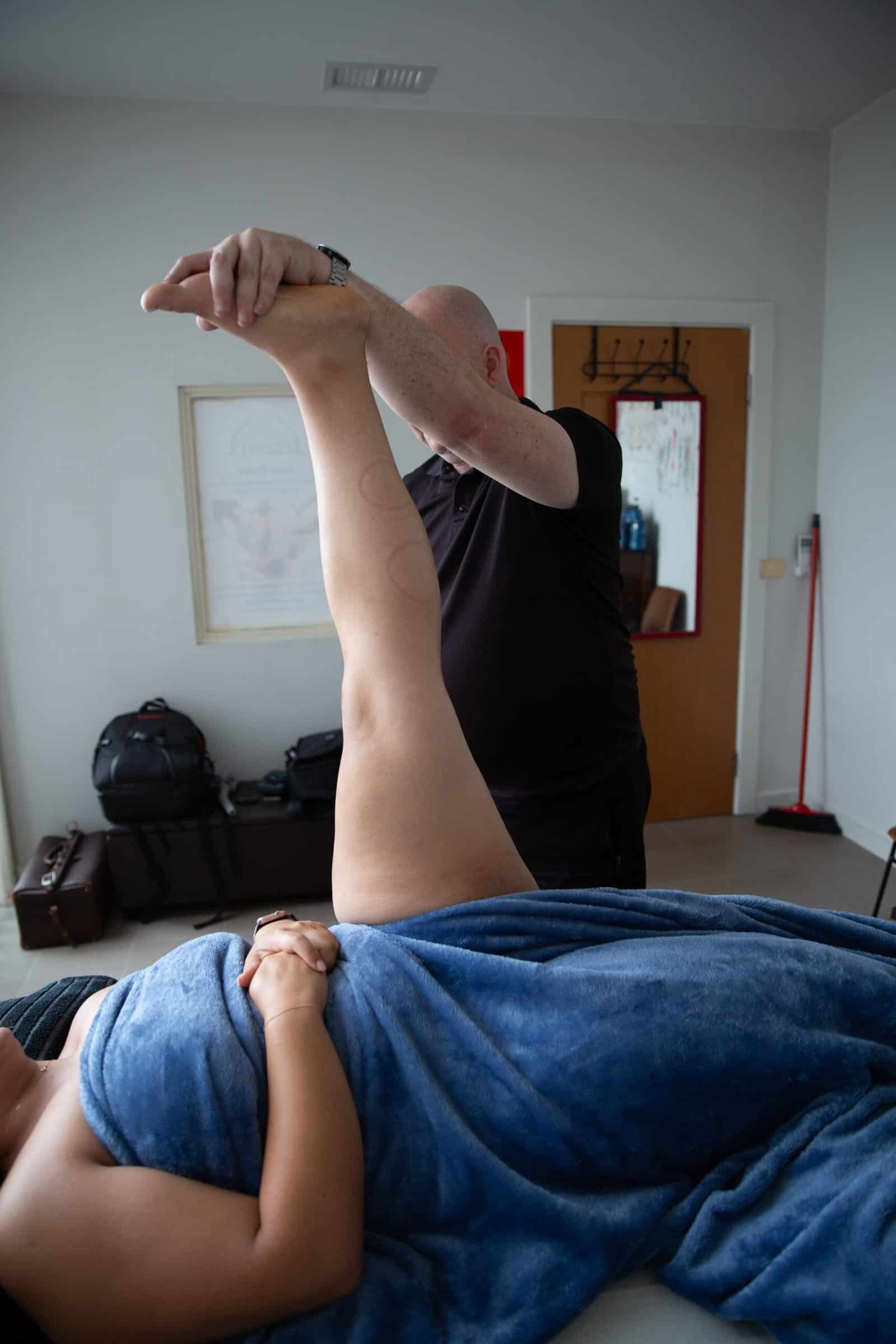
The therapist positions a joint near the edge of its comfortable range. You are then guided to lightly contract a specific muscle against resistance for a few seconds. After the contraction, the muscle relaxes and the joint is reassessed.
This process can help:
- reduce unnecessary muscle guarding
- improve coordination around a joint
- allow small, controlled changes in movement
MET does not force range or rely on strong pressure. It works with the nervous system, making it useful when restriction is driven by protection rather than stiffness alone.
What a session feels like
Muscle Energy Technique is calm, controlled, and low effort.
You will be positioned comfortably and asked to gently engage a muscle against light resistance. The contraction is brief and never forceful. Breathing stays relaxed, and communication is ongoing.
Most people describe the technique as:
- controlled rather than intense
- active but not tiring
- precise rather than broad
There is no deep pressure and no stretching into pain. Any changes in movement usually feel subtle but clear, especially around joints that previously felt guarded or restricted.
When Muscle Energy Technique is useful
Muscle Energy Technique is most useful when movement feels restricted due to guarding or altered control, rather than structural stiffness.
It is commonly used for:
- joint stiffness that eases slightly but does not fully resolve
- protective muscle tension following pain or strain
- side-to-side movement differences
- stiffness linked to prolonged posture or repetitive load
Because MET is low force and client-active, it is often appropriate when stronger techniques feel unnecessary or poorly tolerated.
MET is not designed for:
- acute injury where movement is not yet comfortable
- situations where pain is increasing with light effort
- restoring large or long-standing range restrictions on its own
In these cases, MET may be delayed or used alongside other approaches rather than as the primary technique.
How Muscle Energy Technique fits within a treatment plan
Muscle Energy Technique is rarely used in isolation.
It is often combined with other hands-on techniques to support smoother movement and better control around a joint.
You can view the full range of techniques I use on the Services page.
Within a session, MET may be used:
- before other techniques, to reduce guarding and improve ease of movement
- between techniques, to reassess and refine joint motion
- after hands-on work, to help reinforce more comfortable movement patterns
MET works well alongside pressure-based or tissue-focused approaches because it adds an active component. This can help the nervous system feel more confident about allowing movement rather than protecting against it.
The choice to use MET is guided by assessment and response, not by routine.
Next steps
If Muscle Energy Technique sounds like a good fit, the next step is a simple assessment of how you move and where the restriction is coming from.
From there, the session can include MET on its own or combined with other hands-on work, depending on what your body responds to best.
Common questions
Is Muscle Energy Technique painful?
No. MET uses light, controlled muscle effort. You should not feel sharp pain or strain. The technique stays within a comfortable range at all times.
Do I have to be flexible or strong to do MET?
No. The contractions are gentle and guided. MET is suitable even when movement feels limited or confidence is low.
Is Muscle Energy Technique the same as stretching?
No. MET is active rather than passive. Instead of being stretched, you gently engage a muscle against resistance, then relax. This helps influence movement without forcing range.