
Myofascial Release
I’m Anthony McKergow, a remedial massage therapist based in Hoppers Crossing, holding a Diploma of Remedial Massage (HLT52015) and a professional member of Massage and Myotherapy Australia. I use myofascial release as part of my practice in Hoppers Crossing, with clients travelling from Truganina, Tarneit, Williams Landing, and across Melbourne’s western suburbs.
Myofascial release is a hands-on technique that targets the fascia — the connective tissue that links and surrounds muscles and joints.
Instead of chasing “knots,” I use slow, sustained pressure to areas that feel restricted or stuck. This gives the tissue time to soften and helps the nervous system reduce protective tension.
It’s often useful when movement feels limited, the area stays reactive, or tightness keeps returning.
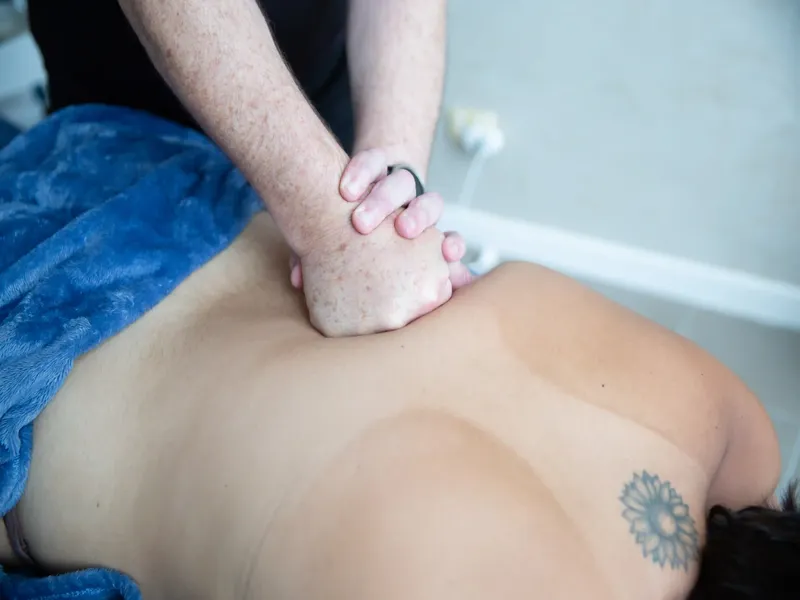
When myofascial release is appropriate
Myofascial release is used when restriction or discomfort feels broad, persistent, or difficult to localise to a single muscle.
It is commonly chosen when tissues feel guarded or resistant, and when other techniques provide only short-term change.
This approach is often useful when:
- Movement feels restricted or stiff rather than sharply painful
- Tension spreads across an area instead of staying local
- The body appears to be holding protective tone
- Other techniques give only short-term relief
- Stiffness around joints that feel guarded or restricted
By working with the connective tissue system, this approach supports easier movement and reduced strain across related regions.
How myofascial release works
Myofascial release works by applying slow, sustained pressure to restricted connective tissue rather than quick or forceful techniques.
This prolonged contact allows the tissue to soften gradually and gives the nervous system time to reduce protective tension. As sensitivity settles, movement often feels easier and less restricted.
Rather than forcing change, this approach works with the body’s response. The goal is to improve tissue glide and reduce unnecessary guarding so joints and muscles can move more freely again.
A 2024 systematic review and meta-analysis in Sports (Antohe et al., 10 randomised controlled trials) found that myofascial release techniques produced significant improvements in joint range of motion, with effects attributed to reduced fascial restriction and decreased muscle tone, supporting the use of slow, sustained pressure as a means of improving movement without forcing tissue change. (PMID: 38787001)
What to expect during treatment
Myofascial release feels slower and more deliberate than many other manual techniques.
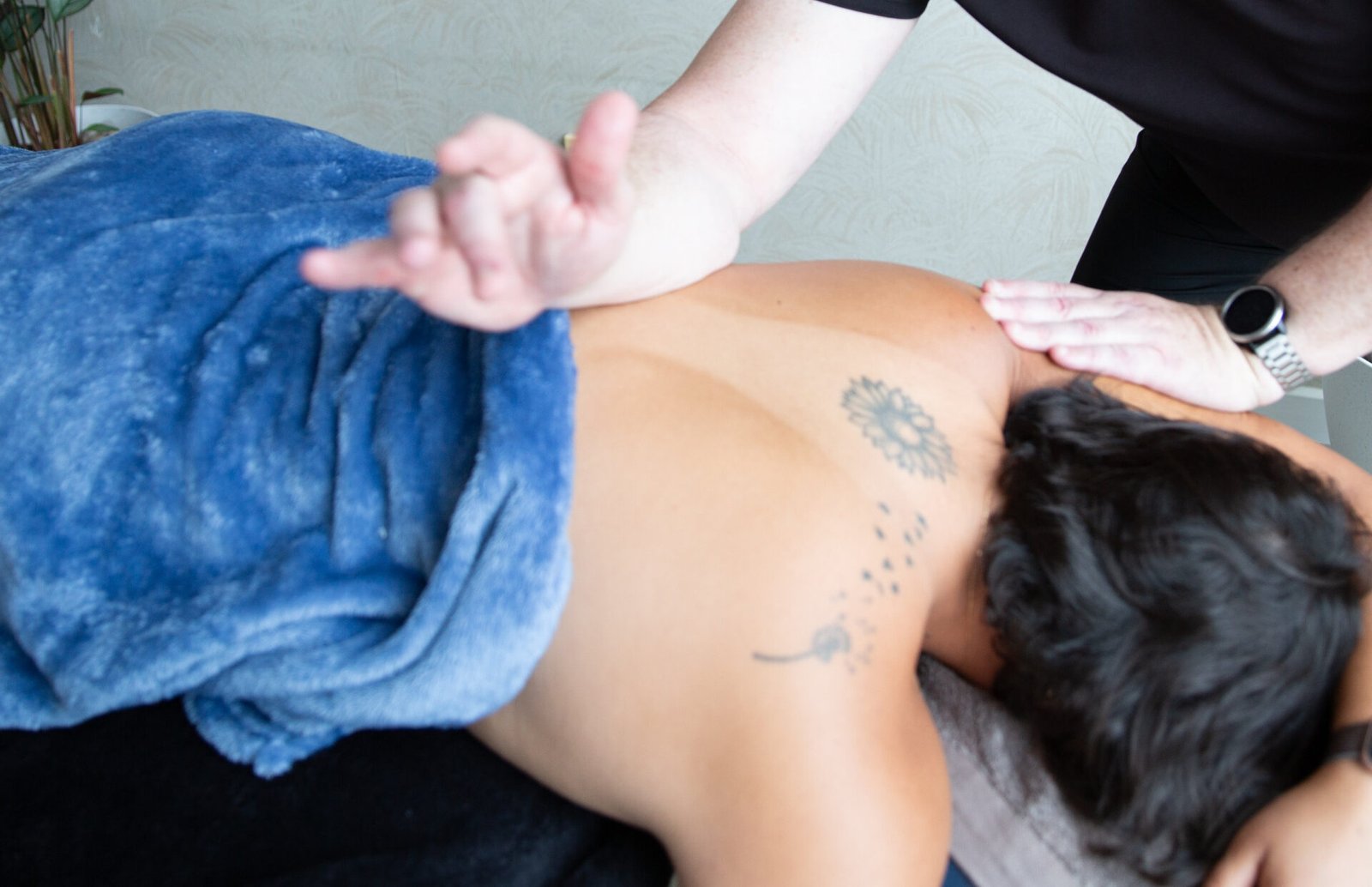
Pressure is applied gradually and held in place rather than moved continuously. Sensation is usually mild to moderate and often described as stretching, warmth, or a sense of tissue “melting” rather than sharp discomfort.
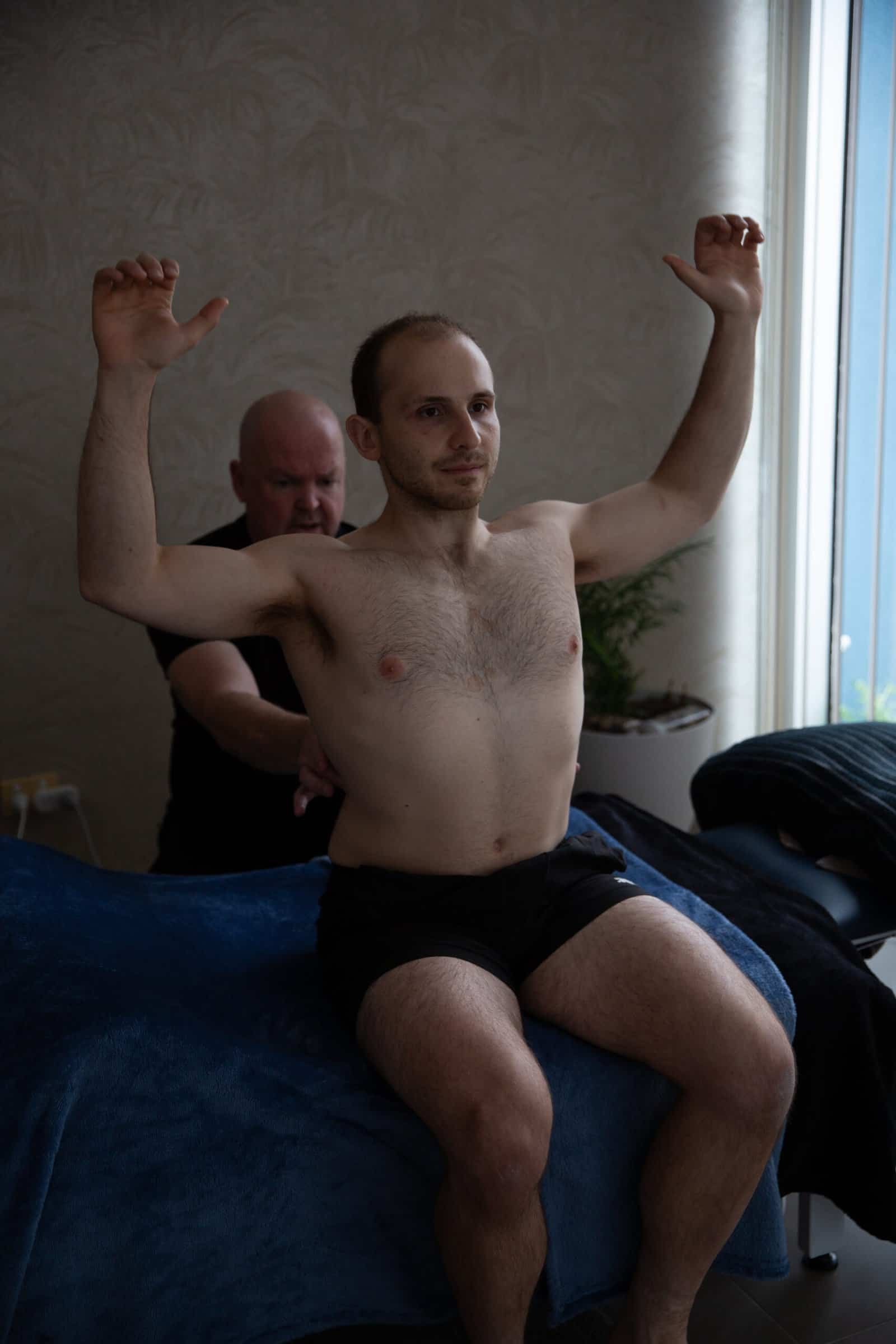
Because the work is slow, changes can feel subtle during the session. Many clients notice the effects more clearly when they move afterward, with less restriction or a lighter, freer feeling through the area.
Is myofascial release right for you?
Myofascial release is often suitable when tissues feel sensitive, guarded, or easily overloaded by firmer techniques.
Because the pressure is slow and controlled, it can be useful for people who:
- Experience persistent tightness without a clear trigger point
- Feel sore or flared after deeper massage styles
- Have long-standing pain where the body stays protective
- Prefer a calmer, more gradual treatment approach
This technique is adapted to the individual and should never feel sharp or forceful. Pressure is adjusted throughout the session based on tissue response and feedback.
As with all manual therapy, myofascial release may be avoided or modified in cases of acute injury, active inflammation, or other clinical contraindications identified during assessment.
How this technique is used in practice
Myofascial release is rarely used in isolation. It is integrated into a broader remedial massage session based on assessment findings and how your body is responding on the day.
It may be used:
- At the start of a session to calm reactive or guarded tissue
- Between other techniques to improve tissue response
- Toward the end of treatment to support smoother movement and recovery
This approach allows treatment to remain flexible. If the body responds well, other techniques may follow. If tissues are sensitive or overloaded, myofascial work may be prioritised instead.
The aim is not to apply a fixed technique, but to choose the most appropriate input to support movement, comfort, and longer-term change.
Potential outcomes of myofascial release
Responses to myofascial release vary. Changes are often subtle at first and become clearer with movement or over subsequent sessions.
Potential outcomes may include:
- Easier, less restricted movement
- Reduced sense of tightness or pulling
- Improved comfort during everyday activities
- Better tolerance to other treatment techniques
This approach focuses on reducing unnecessary protective tone rather than forcing tissue change. For longer-standing patterns, outcomes are typically supported through a combination of treatment, movement, and time.
Last reviewed: June 2026
Considering myofascial release
Book online at pcrmt.splose.com/online-booking/0a1e4760-b674-487c-9cd5-b0f2617e15a9
Common questions about myofascial release
What is fascia, and why does it matter for pain and movement?
Fascia is the connective tissue that surrounds, separates, and links muscles, joints, and organs throughout the body. It is continuous, meaning restriction in one area can influence how surrounding regions move and feel. When fascia becomes restricted, whether through injury, overuse, sustained posture, or prolonged tension, it can reduce tissue glide, contribute to a sense of stiffness or pulling, and make it harder for muscles to move freely. Myofascial release addresses these restrictions directly rather than working on muscle tissue alone.
How is myofascial release different from deep tissue massage?
Deep tissue massage uses firm, moving pressure to work through layers of muscle and connective tissue. Myofascial release applies slower, sustained contact that holds in place and waits for the tissue to respond rather than working through it. The aim is to reduce restriction in the connective tissue system rather than to soften muscle bulk through pressure. The sensation is different, the intent is different, and the two are often used at different points within the same session depending on what the body is doing.
Why does myofascial release use lighter pressure than I expected?
The sustained quality of the contact matters more than the depth. Fascia responds over time rather than to force, and applying too much pressure too quickly tends to provoke a protective response that works against the aim of the technique. Holding gentle, consistent contact gives the tissue and nervous system time to settle, which allows restriction to ease gradually rather than being pushed through. People often find that what feels subtle during a session produces a clearer sense of change once they stand and move afterward.
How quickly will I notice a change from myofascial release?
Some people notice changes immediately when they move after a session. For others, changes are more gradual and become clearer over a few days or over multiple sessions, especially when patterns have been present for a long time.
Is myofascial release suitable if my body is sensitive or easily aggravated by firmer techniques?
Yes, and this is often when it is most appropriate. Because the pressure is slow and controlled and is held rather than moved through the tissue, myofascial release can reach areas that are difficult to treat with firmer approaches. People who find deep pressure provocative or who tend to flare after more forceful techniques often tolerate myofascial work well. Pressure is always adjusted based on how the tissue is responding and what feels appropriate for the area being treated.
Is myofascial release used on its own, or as part of a broader treatment session?
It is almost always integrated into a broader session rather than used as a standalone technique. Depending on what the assessment shows, it may be used at the start of treatment to calm reactive tissue before other techniques are applied, between techniques to help an area settle, or toward the end of a session to support a smoother transition into movement. The decision to include it and when to use it is guided by how the body is responding on the day rather than by a fixed structure applied to every appointment.